
Kutch, in the Details
A quieter look at Kutch, where the vastness of the White Rann is only the beginning and centuries of craft reveal the region one detail at a time.
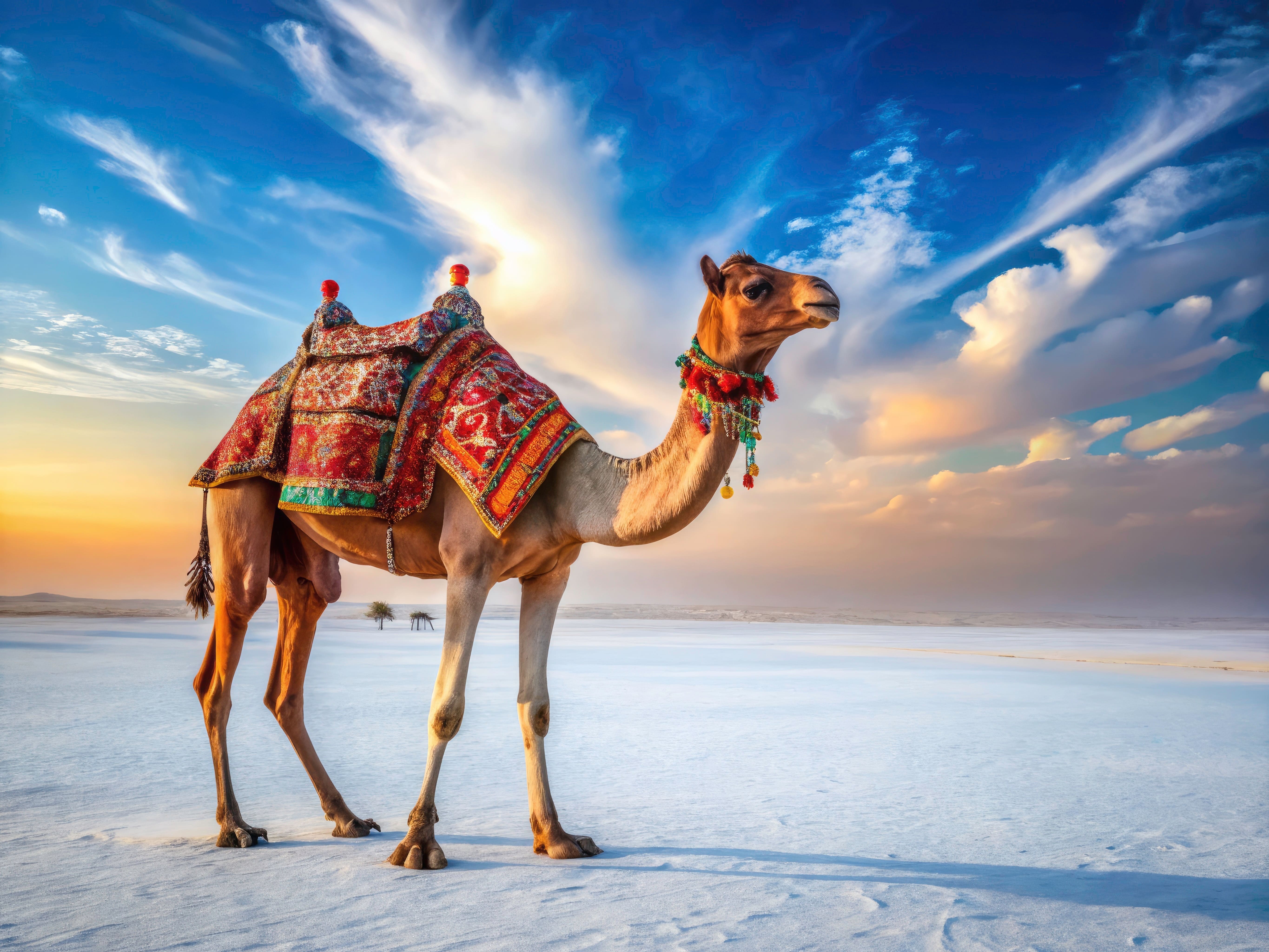
The landscape that clears the mind
There are places that impress you immediately, and places that reveal themselves slowly. Kutch manages to do both.
The first encounter is often with scale. The road runs out toward a horizon that seems almost abstract, and then the White Rann appears: a pale, mineral expanse where distance becomes difficult to judge. At certain hours the light seems to erase the boundary between land and sky. It is beautiful in the obvious way, but also in a more unsettling one. There is very little to look at, and somehow that makes you look harder.
For many travellers, this is the image that brings them to Kutch. Yet the region becomes more memorable once you leave the great white landscape behind and begin noticing its smaller worlds.
A region made by hand
Kutch is one of those rare places where craft is not presented as an accessory to culture. It is culture.
In villages around Bhuj, making is still part of everyday life. Fabric is printed, dyed, embroidered and tied by hand. Metal is beaten and tuned. Leather is cut and stitched. Paint is worked across cloth with extraordinary control. Techniques such as Ajrakh, Bandhani, Rogan painting, copper bell making and regional embroidery are not simply visual signatures; they are repositories of family memory, community identity and patient skill.
The pleasure of seeing these traditions in the place where they belong is very different from admiring the finished object in a store. A block printed textile becomes richer when you understand the repetitions required to build its pattern. A copper bell becomes more interesting when you hear how its tone is adjusted. A piece of embroidery changes once you see the concentration behind each small section of thread.
Travel is at its best when it sharpens attention. Kutch does this almost effortlessly.
Bhuj as a beginning, not a stopover
Bhuj is often treated as a base, but it deserves more curiosity than that. The city carries layers of princely history, earthquake memory, markets, old neighbourhoods and a strong connection to the craft communities that surround it.
The most rewarding days here are not necessarily the most crowded. A museum in the morning, a workshop later, a simple meal, time to browse textiles without rushing, perhaps a conversation that was never on the itinerary. Kutch rewards a slower rhythm because so much of what matters is not monumental. It is tactile and personal.
That slower pace is also what allows the contrast of the region to register. One moment you are surrounded by colour, pattern and conversation; the next, the landscape opens into salt, sky and silence.
The art of looking closely
There is a temptation, in a visually rich place, to collect images quickly. Kutch asks for the opposite.
Look at the tiny irregularities in a hand printed textile. Notice how natural and geometric motifs sit beside one another. Listen to how artisans speak about colour, inheritance and change. Watch how a village home uses mirror work, mud relief or embroidery not as decoration added later, but as part of the language of the place.
This is where an art led journey becomes more than a tour of workshops. The real experience is learning how to see. It is understanding that beauty can be inseparable from utility, that a tradition can remain alive while adapting, and that the hand of the maker is part of what gives an object its value.
A different kind of luxury
Kutch is not luxurious because it is polished. Its luxury lies in access to time, knowledge and attention.
It is the luxury of sitting with someone who has spent decades mastering a technique. Of having enough time to ask a second question. Of watching sunset over the Rann without immediately moving on to the next stop. Of discovering that a destination you thought you understood from photographs has a much more layered personality in real life.
The White Rann may be the grand finale, but the feeling of Kutch is built in quieter moments: indigo on fingertips, the soft weight of handwoven cloth, a market conversation, bells being tuned, tea arriving while someone explains a family craft.
You leave with photographs, of course. But if Kutch has worked its way under your skin, you also leave looking at handmade things differently.
The Salori way
For Salori, Kutch makes sense not simply as a destination, but as a journey shaped around art and curiosity. The point is not to cover the region. It is to enter it through the people who make, preserve and reinterpret its visual culture.
A small group changes the experience. There is room to linger in a workshop, to compare what each person noticed, to ask questions that would be lost in a larger tour and to share the silence of the Rann without needing to fill it.
Come for the white horizon. Stay for the details.