
The Quiet Wilds of Sariska
Sariska is often reduced to the possibility of a tiger sighting. Its real appeal lies in the Aravalli landscape, old ruins, quiet mornings and the space to do less.
Close enough to Delhi for a long weekend, Sariska feels farther away than the map suggests. Beyond the safari gates lies a landscape of dry forest, old stone, long shadows and the particular pleasure of slowing down.
Beyond the sighting
Wildlife travel has a way of turning us into scorekeepers. We count sightings, compare photographs and quietly hope for the moment that will justify the early wake up call.
Sariska is better when you resist that impulse.
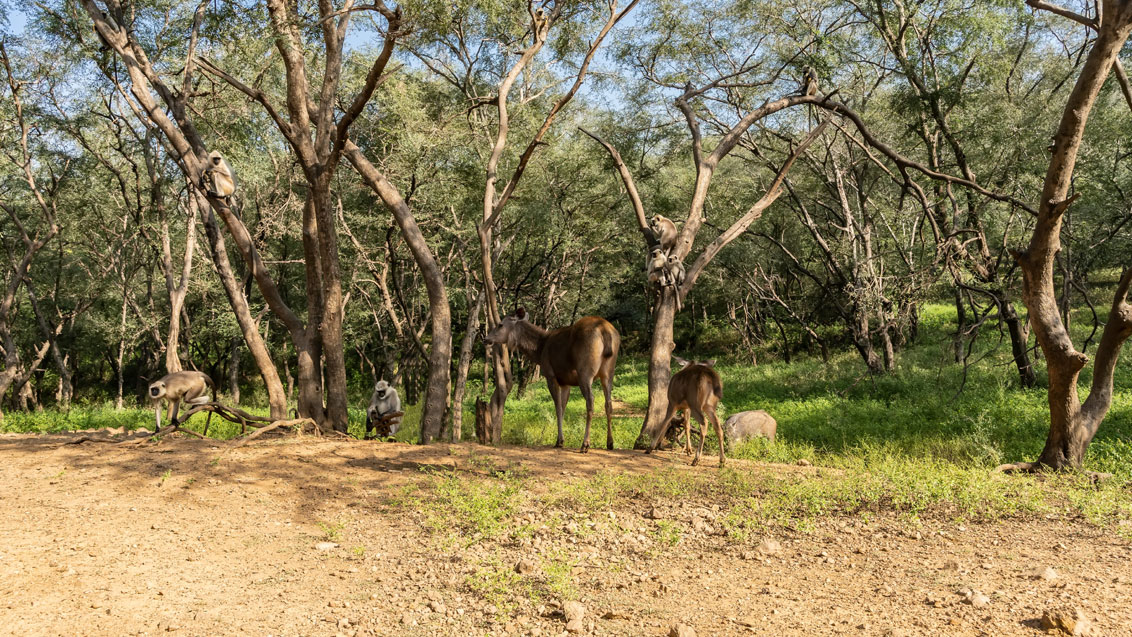
The reserve, folded into the Aravalli hills of Alwar, is a landscape of dry deciduous forest, rocky ridges, grassland and long stretches of pale road. Tigers are part of its story, but not the whole story. Sambar appear at the edge of the trees. Peacocks move through the undergrowth. Langurs watch from old walls. A raptor circles overhead. Some drives are dramatic; others are almost meditative.
The pleasure lies in becoming alert to the forest rather than demanding that it perform.
A landscape with memory
Sariska is unusual because the wild and the historic sit so close together. Within and around the reserve are traces of forts, temples and settlements that make the landscape feel inhabited by time as much as wildlife.
Kankwari Fort rises within the reserve, a reminder that these hills were once strategic as well as scenic. The Neelkanth temple complex, with its carved stone and isolated setting, introduces another register entirely. Nearby Bhangarh has its own atmosphere of abandoned streets, temples and ruined havelis, though the legends surrounding it often overshadow the quieter pleasure of the architecture itself.
Seen together, these places complicate the idea of a safari destination. Sariska is not an untouched wilderness. It is a landscape where nature, faith, politics and human history have overlapped for centuries.
The appeal of an unhurried weekend
Part of Sariska's charm is practical. It can be reached from Delhi and Gurugram without committing to a full holiday, yet the transition feels decisive.
By late afternoon, city habits begin to loosen. Phones stay in rooms. Conversations stretch. Dinner is not squeezed between meetings. In the morning, the air is cooler and the day begins before the noise of ordinary life has fully arrived.
This is the kind of place where one well planned safari may be more satisfying than an itinerary packed with activity. Add a walk, a good lunch, time by a pool or under a tree, perhaps a visit to a historic site, and the weekend starts to feel generous rather than brief.
Why the smaller moments stay
The most memorable part of a wildlife trip is not always the rarest sighting.
Sometimes it is the first cup of tea before dawn, handed over while everyone is still half asleep. Or the collective silence when the guide raises a hand and the vehicle stops. It may be the sound of alarm calls carrying through the forest, or the relief of a late breakfast after several cold hours outside.
Small group travel suits Sariska because the atmosphere depends on these shared, lightly choreographed moments. There is room for different interests too. One person may care about birds, another about photography, someone else about architecture or simply being outdoors.
The forest gives each person something slightly different, and the conversation afterwards is part of the experience.
A softer idea of escape
Luxury in the countryside is often marketed through excess. Sariska suggests something more restrained.
A comfortable room matters. So does a beautiful setting and a thoughtful meal. But the deeper luxury is having the day arranged so that nothing feels rushed. It is waking before sunrise for a reason, then having nowhere urgent to be afterwards. It is being looked after without feeling managed.
For travellers whose weeks are full of schedules, notifications and decisions, that simplicity can feel surprisingly rare.
The Salori way
A Salori weekend in Sariska should not be built around the promise of a tiger. No responsible wilderness journey can offer that.
It can, however, offer the pleasure of entering the forest well, with a knowledgeable guide, a small group and enough time to notice what is happening around you. It can connect the reserve with the history of the Aravallis, good food, thoughtful downtime and conversations that continue long after the safari is over.
The tiger, if it appears, is extraordinary. The weekend should be worth taking even if it does not.