
Things to Do in Mandawa: Explore Fresco Art, Havelis and Local Culture
Some towns ask you to look up. Mandawa asks you to look closer. A weathered doorway might frame a peacock painted generations ago; a quiet courtyard may open onto a ceiling covered in colour. In this small town in Rajasthan’s Shekhawati region, stories live on walls, and the best way to meet them is on foot, with curiosity rather than a checklist.
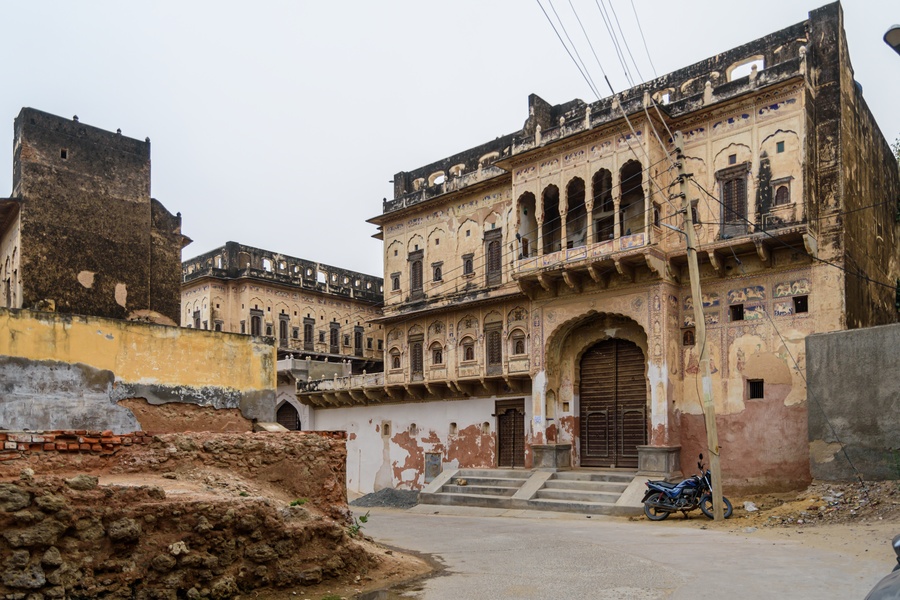
Mandawa is often introduced as an open-air art gallery. That description is useful, but incomplete. It is also a lived-in town of neighbourhood lanes, family histories, local businesses and buildings in different states of care. Come for the art, certainly. Stay for the conversations that help you understand why it exists. For a traveller drawn to photography, architecture, craft or the pleasure of noticing, there is more here than a quick stop between cities.
Begin with a slow fresco walk
Walk through the older lanes in the gentler light of morning, ideally with a knowledgeable local guide. Look beyond the most famous façades to smaller painted arches, courtyards and niches. Notice the repetition of flowers, animals and geometric borders, and how colours have softened differently depending on shade and exposure. A guide can distinguish legends from documented history and explain which properties are private homes. Ask permission before entering courtyards or photographing residents.
The beauty of a slow walk is what happens between landmarks: a painterly detail you nearly miss, the texture of an old wooden door, or a resident describing how the lane has changed. If you like photography, try a small exercise: take one wide frame, one close detail and one image that captures daily life respectfully. Three thoughtful photographs can tell a better story than thirty hurried ones.
Read the murals like chapters of social history
Shekhawati’s merchant families commissioned richly decorated havelis as expressions of prosperity, memory and taste. Many murals feature mythology and courtly scenes; others show technologies, fashions and travel influences reaching the region. A train or European figure on a Rajasthani wall can be as intriguing as a traditional image of Krishna. Rather than treating these as unusual picture opportunities, ask what they reveal about trade, aspiration and the changing world.
The word “fresco” is widely used for the painted walls here, though techniques vary across buildings. If an artist or conservator is available to speak with, ask about pigments, plaster, weather damage and the difficulty of restoring painted surfaces without losing their character. That conversation can transform decoration into a living craft story.
Visit distinctive havelis without rushing
The Goenka Double Haveli, Hanuman Prasad Goenka Haveli and Murmuria Haveli are names worth discussing with a local guide when planning your walk. Their painted exteriors and details help illustrate the region’s mix of sacred imagery, ornament and later influences. Opening arrangements, access and restoration conditions can change, so do not assume that every named haveli is open inside.
Make space to stop at just a few examples instead of attempting every building. Look at how balconies shade the street, how an inner courtyard creates privacy, and how decorative choices differ from one residence to another. Architecture lovers may enjoy comparing the public face of a haveli with its quieter inner spaces wherever access is permitted.
Give Mandawa Fort and the wider town context
Mandawa Fort, now used as a heritage hospitality property, offers another perspective on local history and design. Its setting makes the relationship between fort, market and merchant homes easier to imagine. Access to particular areas depends on the property’s current arrangements; check in advance rather than treating it as an unrestricted monument.
Then return to the streets. A cup of chai and an unhurried market walk can offer as much texture as a formal monument visit. Seek out local snacks, listen to the sounds of commerce and notice how historic buildings continue to adapt to practical needs. The point is not to romanticise decay; it is to understand that Mandawa is a community, not a museum.
Make it a photography experience
Early and late daylight flatter the painted walls, but strong images depend on observation more than perfect weather. Frame an entire doorway to show scale, then get close enough to capture brushwork. Try contrasting restored and faded surfaces without suggesting that either tells the whole story. Avoid touching fragile murals, using harsh flash in sensitive interiors, or moving objects for a photograph.
Travelling with fellow photography enthusiasts can make this richer: compare what each person noticed on the same street. One traveller sees symmetry; another sees the patina of time; another notices a small interaction in a shop. Shared looking is often the best creative workshop.
Discover neighbouring Shekhawati, selectively
If time allows, consider extending the art trail to nearby Shekhawati towns such as Nawalgarh or Fatehpur, each with its own painted heritage. The temptation is to cover all of them in one drive, but their value comes from being explored at a humane pace. Choose one additional place only if it serves a specific interest: more architecture, a local guide’s story or a chance to visit a craft-focused stop.
For a two-night visit, one dedicated day in Mandawa and one shorter outing can feel more rewarding than a packed regional circuit. Build in return time before dinner; the best memories may arrive while talking over what you saw.
Plan a stay that gives the town time
A heritage-style stay can complement the art trail, particularly if the property has preserved architectural details and offers meaningful context rather than only decorative nostalgia. Ask about room accessibility, stairs, cooling and heating, meal arrangements and whether a local guide can be organised. These practical details matter as much as aesthetics, especially for multigenerational or mixed-ability groups.
Mandawa is most comfortable for extended walks in the cooler months, broadly October through March. Summers can be very hot, and conditions vary from year to year. Two nights are ideal for travellers who want photographs, stories and an unhurried morning; one night works if expectations are modest.
A final way to deepen the experience
For families and groups, the pace is as important as the route. Older travellers may prefer shorter walking loops with seating breaks, while enthusiastic photographers may want extra time. Discuss these differences before setting out. The easiest compromise is often a common guided start followed by a little individual time. In Mandawa, the point of slowing down is not to do less for its own sake; it is to preserve the ability to notice and enjoy what is already there.
A mindful one-day Mandawa route
Start with an early heritage walk while façades are gently lit. Pause for breakfast, then return to two or three havelis that genuinely captured your interest. After lunch, spend time in the market or enjoy a short conversation with a local guide about conservation. Keep the evening free for a relaxed meal and to share photographs or sketches. This is deliberately not a minute-by-minute schedule: access, weather and interests should shape the day.
What to eat, notice and take home
Mandawa is not the place to race through a generic restaurant list. Ask your host or guide which local Rajasthani dishes are available that day and choose a comfortable setting to try them. If you are curious about regional cooking, talk about how climate, storage and seasonal ingredients influence household food. Avoid assuming every restaurant will prepare every traditional dish. In local markets, focus on something small and meaningful: a handmade item, a useful object or a conversation with a shopkeeper about the goods. Rather than buying objects said to be “antique” without provenance, support contemporary makers and reputable local businesses.
Consider leaving with a visual diary instead of a bag full of souvenirs. Write the name of one painting detail, a story from a guide and the sound of the street at lunchtime. These are the details that tend to return when a photograph alone has become familiar. If you travel with companions, exchange one observation each over dinner. Shared memories become richer when they are specific.
How to be a better guest in a heritage town
Ask before entering residential buildings, support guides who know and respect the community, and avoid posing against crumbling walls in ways that damage them. If a resident is working or resting, their privacy matters more than your photograph. Carry small cash for local purchases, but seek transparent pricing before engaging services. Bring comfortable shoes for uneven surfaces and take a reusable water bottle. You will have a more rewarding experience when the town is treated as someone’s home rather than your backdrop.
Frequently asked questions
Q1 - What is Mandawa famous for?
Ans - Mandawa is known for its ornately painted havelis and fresco-style wall art in Rajasthan’s Shekhawati region.
Q2 - What is fresco painting in Mandawa?
Ans -It refers broadly to painted murals on plastered walls and ceilings, featuring mythology, daily life, decorative patterns and later outside influences; specific techniques vary.
Q3 - How long should I stay in Mandawa?
Ans -Plan one night for a brief introduction or two nights for a relaxed heritage walk, photography and nearby exploration.
Q4 - What are the best things to do in Mandawa?
Ans -Take a guided heritage walk, study the haveli murals, explore local lanes, photograph architectural details and enjoy a heritage stay.
Q5 - What is the best time to visit Mandawa?
Ans -October to March is usually most pleasant for walking, while summer afternoons can be intensely hot.
Q6 - Can I enter every haveli?
Ans -No. Many are private, partially accessible or subject to changing restrictions; always confirm access and seek permission.
Q7 - Is Mandawa worth visiting for a weekend?
Ans -Yes, particularly from Delhi NCR or Jaipur if you value art, history and a slower pace rather than numerous attractions.
Travel for what moves you
At Salori, a place like Mandawa is not about crossing off the most photographed buildings. It is about standing together before a painted wall and asking what it remembers. If art, heritage, photography and good conversation are your passions, Mandawa gives you plenty of reasons to linger.